 Ultimate guide
Tracing African American Spiritual Roots Through History
Last Updated: November 8, 2026
Quick Summary
African American spiritual roots research traces how faith, ritual, and community survived the Middle Passage and took new form on American soil. Because enslavement severed surnames, birth records, and church minutes, spiritual history fills gaps by placing ancestors in communities through praise house ledgers, ring shout descriptions, and conversion narratives.
- Enslaved Africans came from distinct societies, then were deliberately mixed on plantations and in ports.
- The invisible church of hush arbors and brush meetings became the seedbed for later Black institutions.
- Freedmen's Bureau records from 1865 to 1872 are the richest federal source for the Reconstruction transition.
- The African Methodist Episcopal Church was formally organized in 1816 as the first independent Black denomination.
- Start research with living memory, then federal records, then church and denominational archives.
Table of Contents
- Why African American Spiritual Roots Research Matters
- West African Roots of African American Spirituality
- A Chronological Framework for African American Religious History
- African American Spirituals and Their History as Living Archives
- Hoodoo and African American Spiritual Traditions: Context and Caution
- Traditions Beyond Christianity: Islam and African-Derived Religions
- How to Evaluate Primary Sources and Archival Collections
- Start Your Own Spiritual Roots Research with Guided Resources
- Frequently Asked Questions
Why African American Spiritual Roots Research Matters
African American spiritual roots research traces how faith, ritual, and community survived the Middle Passage and took new form on American soil. That work is both historical and personal, because the records you uncover rarely sit quietly on the page.
The stakes are practical. Many families hit a wall because enslavement severed surnames, birth records, and church minutes. Spiritual history fills some of that gap: a praise house ledger, a ring shout description, or a conversion narrative can place an ancestor in a community when the census cannot.
West African Roots of African American Spirituality
The West African roots of African American spirituality run through specific, documented practices rather than vague "African influence." Enslaved Africans came largely from societies with sophisticated ideas about a remote creator, intermediary spirits, ancestral veneration, divination, and sacred music that carried prayer.
A common mistake is treating African religious beliefs as a single tradition.
Watch out: assuming a single "African origin" for a specific family ritual will send your research toward a conclusion the evidence cannot support. Trace the practice, then trace the region.
Continuity and Adaptation Across the Atlantic
Continuity and adaptation worked together. Where enslavers permitted gatherings, call-and-response, ring shout, drumming patterns, and burial custom persisted with remarkable fidelity. Where they did not, the same underlying beliefs resurfaced inside Christian worship: spirited singing, mourning benches, watch nights, and extended prayer.
Researchers should read adaptation as intelligence, not loss. Communities preserved what could be preserved and rebuilt the rest under pressure, which is why the Black religious experience looks different in coastal Georgia, the Mississippi Delta, and urban Detroit.
A Chronological Framework for African American Religious History
A working chronology keeps African American religious history from blurring into one long era. Use the periods below as containers for the records you find, and note the record type each period tends to produce, because that is what you will actually search.
| Period | Approximate Span | Defining Religious Development | Records That Tend to Survive |
|---|---|---|---|
| African origins and trade | Before 1619 | Regional West and Central African traditions, divination, ancestral practice | Oral tradition, later ethnographic accounts, archaeological reports |
| Colonial and early enslavement | 1619 to 1770s | Forced mixing, covert gatherings, early Christian exposure | Colonial statutes, missionary letters, plantation inventories |
| Antebellum slavery | 1770s to 1861 | Camp meetings, hush arbors, spirituals, invisible church | Slave narratives, abolitionist newspapers, church minutes, song collections |
| Civil War and Reconstruction | 1861 to 1877 | Independent Black churches, denominational organizing | Freedmen's Bureau records, denominational minutes, school ledgers |
| Jim Crow and Great Migration | 1877 to 1950s | Storefront churches, Holiness and Pentecostal growth, urban congregations | City directories, church programs, photographs, oral histories |
| Civil rights era to present | 1950s to now | Church as political base, diversification of traditions | Newspapers, court records, organizational archives, survey data |
From Enslavement to Reconstruction
During slavery, Christian instruction was often withheld, censored, or weaponized. Enslaved Africans heard selected sermons while building their own worship in secret, and the "invisible church" of hush arbors and brush meetings became the seedbed for later institutions.
After emancipation, Black congregations organized fast. For the biblical passages enslavers cited, our article on the Deuteronomy 28 slave verses explained examines those texts in historical context.
Jim Crow, the Great Migration, and Beyond
Under Jim Crow, churches doubled as banks, schools, meeting halls, and courts of mutual aid. The Great Migration carried those institutions north and west, where storefront congregations and Holiness and Pentecostal movements multiplied. A family that left Mississippi for Chicago around 1920 often left one church record behind and created another within a year, so search both ends of the migration.
A Short Timeline of Turning Points
- 1619: The first recorded Africans arrive in Virginia; colonial law begins defining their status by 1662.
- Late 1700s: The Second Great Awakening and camp meetings reach enslaved and free Black communities, often in segregated seating.
- 1816: The African Methodist Episcopal Church is formally organized, the first independent Black denomination in the United States.
- 1865 to 1872: Freedmen's Bureau operations generate the federal records most families still rely on.
- Early 1900s: Holiness and Pentecostal movements spread through storefront congregations in both South and North.
- 1916 to 1970: The Great Migration reshapes urban religious life and creates new denominational networks.
- 1950s to 1960s: Churches become organizational centers of the civil rights movement.
- Late 1900s to present: Black Muslim communities, African-derived traditions, and nondenominational churches diversify the landscape.
Watch out: treating these dates as fixed boundaries will cause you to miss records that cross them, such as a church founded in 1866 that kept minutes under three different names by 1900.
African American Spirituals and Their History as Living Archives
African American spirituals and their history function as oral records: encoded theology, geography, and hope carried in melody.
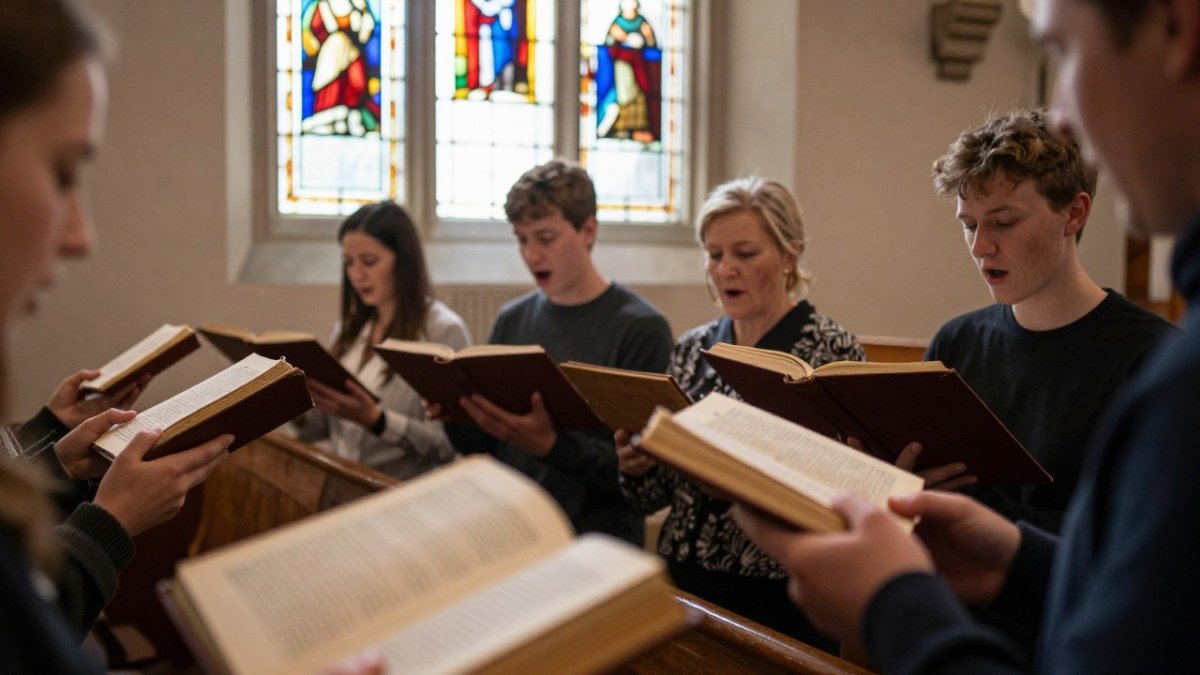
What most guides miss is that spirituals were not only sorrow songs. They were instructional, satirical, and organizational.
For researchers, treat a song as a primary source.
Hoodoo and African American Spiritual Traditions: Context and Caution
Hoodoo and African American spiritual traditions deserve careful, respectful treatment, because the popular record is badly distorted. Hoodoo is a folk practice rooted in African-derived and Christian elements, concerned with protection, healing, and resolution of trouble.
Watch out: much of what circulates online about Hoodoo is sensationalized or copied from unreliable sources.
Related traditions, including conjure, rootwork, and aspects of Santería and Vodou in the wider diaspora, are living religions with practitioners. Describe them accurately and without caricature.
Traditions Beyond Christianity: Islam and African-Derived Religions
Christianity dominates the popular picture, yet the African diaspora produced and sustained other traditions.
African-derived religions such as Santería, Candomblé, and Vodou developed across the diaspora, with orisha veneration and ritual practice that preserved African religious beliefs under pressure.
A note on method: these traditions are frequently described in hostile sources. Read them alongside practitioner accounts and academic work before drawing conclusions.
How to Evaluate Primary Sources and Archival Collections
Evaluating primary sources is where most spiritual roots research succeeds or fails. Start with provenance: who created the record, for what purpose, and who has held it since. A plantation owner's diary and an enslaved person's narrative describe the same events from opposite positions of power.
A Practical Workflow
- Define the question narrowly. "Where did my great-grandmother worship between 1910 and 1930?" is researchable; "what did my family believe?" is not, until you have records.
- Start with living memory. Interview elders before you touch an archive, record with consent, and note the date of the interview and the interviewer.
- Move to federal records. Census schedules, military service files, and Freedmen's Bureau records establish places and dates that church records can then confirm.
- Search church and denominational archives. Minutes, membership rolls, baptismal registers, and Sunday school ledgers are the records that place an ancestor in a spiritual community.
- Log every claim with its source. A simple research log with columns for date, repository, call number, and what the record actually says will save you from re-reading the same box twice.
Weighing Source Types
Use this checklist before you accept any source:
- Identify the author and their relationship to the people described
- Confirm the date and whether it was written at the time or remembered later
- Check for transcription errors in names, especially phonetic spellings
- Cross-reference against at least one independent record
- Note the archive's collection scope and any known gaps
- Distinguish original documents from later compilations
Oral tradition is evidence, but of a different kind than a ledger. A family story about a ring shout may preserve a practice accurately while compressing three generations into one. Treat it as a lead to verify, not a conclusion to defend, and record who told you what and when.
Where to Search
Archival collections to prioritize include the Library of Congress, the National Archives, the Smithsonian's National Museum of African American History and Culture, and denominational archives. The Library of Congress digital collections hold church records, ex-slave narratives, and sheet music.
State and county historical societies often hold the church minutes that national repositories do not, and historically Black denominational archives, such as those maintained by the African Methodist Episcopal Church and the National Baptist Convention, hold records that never entered federal custody.
Terminology and Its Limits
Terms like "invisible church," "hush harbor," "praise house," and "ring shout" are useful but not interchangeable, and sources use them inconsistently. A praise house in coastal Georgia is not the same institution as a hush harbor in Virginia. Define the term as your source uses it, because collapsing them will flatten the regional variation you are trying to document.
Start Your Own Spiritual Roots Research with Guided Resources
Starting your own research works best with structure.
For readers ready to go deeper, the Spiritual Lineage Bible Study Journal Guide walks through a 30-day reflective process that connects Scripture, history, and DNA evidence. Sunday School teachers and small-group leaders can download the free teaching resources, including a sample chapter and a Study Companion and Discussion Guide built for group settings. If you want to see everything available, explore the full collection of Sacred Lineage and The Hebrew Heritage Toolkit.
A common mistake is waiting for perfect evidence before starting. Begin with what you have, and let the research correct you as it goes.
The hardest part of this work is not finding records. It is holding them honestly, without forcing them into a conclusion you hoped for.
Get the free resources from June Conway to give your spiritual roots research a structure you can trust.
Frequently Asked Questions
What are the African roots of African American spirituality?
West and Central African traditions form the foundation. Enslaved Africans carried beliefs about a higher being, ancestor veneration, ritual music, dance, and call-and-response into the Americas. These elements blended with Christianity over centuries, producing distinct practices like ring shouts, spirituals, and folk traditions. Researchers trace these roots through oral tradition, archival collections, and comparative study of West African religious systems alongside enslaved communities' records.
How can I research my African American spiritual roots?
Start with family oral histories, then move to church records, Freedmen's Bureau documents, and archival collections at historical societies. Slave narratives and Works Progress Administration interviews offer firsthand accounts. Pair documentary research with DNA ancestry testing and haplogroup evidence where available. Guided study journals and structured research toolkits can help organize findings and connect historical evidence to biblical narratives for personal or group reflection.
What role did spirituals play in African American history?
Spirituals functioned as more than worship music. They preserved West African musical structures, encoded escape routes and resistance messages, and sustained community through enslavement and Jim Crow. Songs like "Go Down, Moses" and "Swing Low, Sweet Chariot" carried double meanings. The oral tradition of spirituals and slave songs became a primary source for historians studying African American religious history and cultural continuity.
How did West African traditions influence African American religious practices?
West African traditions shaped worship style, community structure, and ritual practice. Call-and-response, rhythmic clapping, dance during worship, and the role of elders all reflect African continuities. Religious syncretism blended these with Christian theology, producing unique forms of faith expression. Hoodoo and folk religion also preserved African-derived botanical knowledge and ritual practices, though these traditions require careful, respectful study through reliable primary sources.
What are reliable sources for studying African American religious history?
Look for archival collections at institutions like the Library of Congress, the National Museum of African American History and Culture, and university special collections. Slave narratives, church minutes, and denominational archives provide primary source material. Peer-reviewed scholarship and museum resources offer context. Evaluate sources for authorship, date, and bias, especially when examining records written by enslavers rather than by enslaved people themselves.