 Ultimate guide
African Heritage Bible Study Guide: 2026 Deep Dive
Table of Contents
- Why an African Heritage Bible Study Guide Matters in 2026
- How to Study the Bible with a Cultural Lens
- Biblical Study Guides for Sunday School and Small Groups
- DNA, Genealogy, and Biblical Narrative: Connecting the Dots
- Curated African Heritage Study Resources and Comparative Guides
- Theological Frameworks for the African Diaspora
- Conclusion: Your Next Steps in Heritage Study
- Frequently Asked Questions
Last Updated: October 4, 2026
Why an African Heritage Bible Study Guide Matters in 2026
An African heritage Bible study guide is a structured resource that connects Scripture to the history, ancestry, and spiritual legacy of African American believers.
That conviction matters more now than it did a decade ago.
This guide walks through how to study the Bible with a cultural lens, what makes biblical study guides for Sunday school work in practice, and where DNA evidence fits into the biblical narrative.
How to Study the Bible with a Cultural Lens
Reading Scripture through a cultural lens means asking what a passage meant to its first audience before asking what it means to you. That order matters. Skip it, and interpretation drifts toward whatever the reader already believes.
A workable method has three movements:
- Establish the historical setting, including the empires, migrations, and trade routes that shaped the text.
- Identify the literary form, since prophetic literature, law, poetry, and narrative each carry meaning differently.
- Apply the passage to your own context last, after the first two steps are done.
This is basic biblical hermeneutics, and it is the same discipline seminaries teach. The difference is that a cultural lens adds one more question: how has this text been read by African-descended believers across history, and what did they see that other readers missed?
Starting with Historical Context
Historical context is the anchor of any honest scriptural interpretation.
Take the exile passages. A reader who knows the Babylonian conquest reads them as survival literature, not abstract prophecy. That shift changes everything about how the text lands.
Smithsonian's National Museum of African American History and Culture collections documents how enslaved and freed African Americans used Scripture as a source of spiritual empowerment, reading the exodus narrative as their own story.
Biblical Study Guides for Sunday School and Small Groups
The best biblical study guides for Sunday school combine structured discussion questions with enough historical background that a volunteer teacher can lead without a seminary degree.
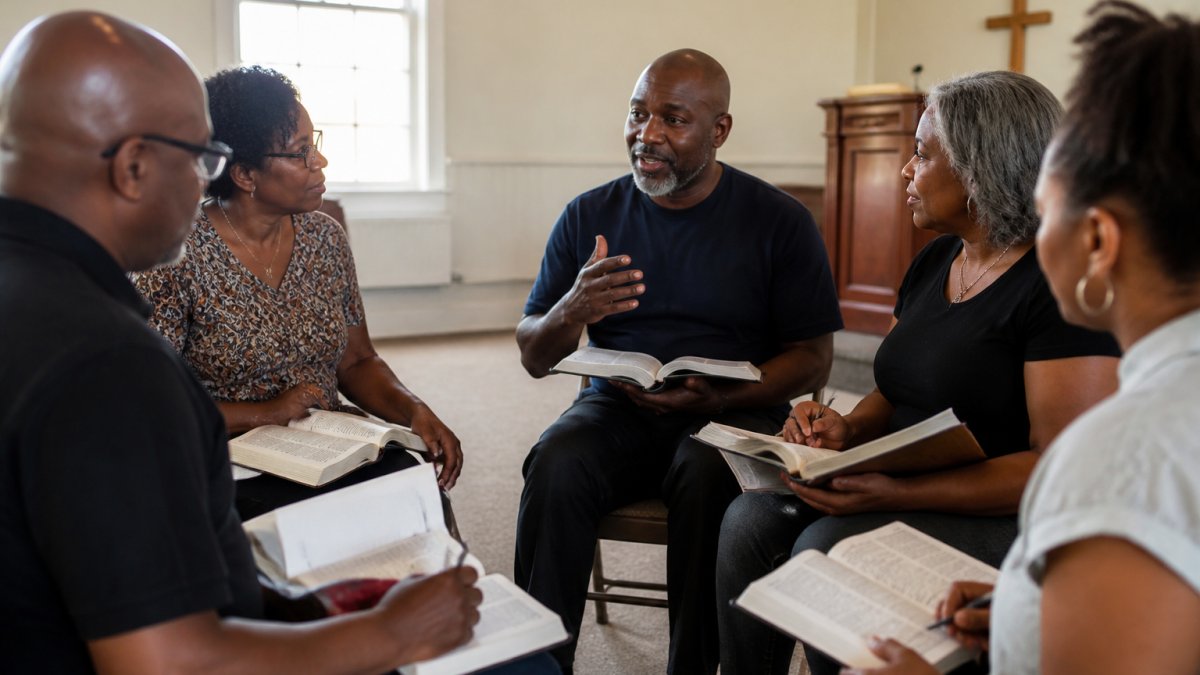
A practical group guide needs four things: a clear weekly reading plan, background notes short enough to read in ten minutes, discussion questions that move from observation to application, and a facilitator section that anticipates hard questions.
What a Workable Session Actually Looks Like
Most adult classes run 45 to 60 minutes, and a heritage study session has to fit inside that window without feeling rushed. A pattern that holds up across class sizes:
- Opening (5 minutes): read the passage aloud. Rotate readers so the text is heard in multiple voices.
- Context brief (8 minutes): the facilitator delivers the historical background from prepared notes. Keep it to the setting, the audience, and the literary form.
- Observation questions (10 minutes): what does the text say? Who is speaking, to whom, and about what? Resist interpretation here.
- Interpretation questions (15 minutes): what did this mean to the first audience, and how have African-descended readers historically received it?
- Application (10 minutes): what does this ask of us this week? One concrete commitment beats five abstract resolutions.
- Close (2 minutes): summarize the thread and preview next week's reading.
A facilitator section should also anticipate the room you actually have: a class where three people have read the whole Bible and five have never opened a study guide. Mixed-knowledge rooms are the norm, not the exception. Pair a seasoned reader with a newer one during observation questions so the newer reader is not put on the spot.
Leading Sensitive Discussions with Confidence
Sensitive passages require preparation, not avoidance. Deuteronomy 28 comes up often in heritage study, and facilitators who dread it usually end up either skipping it or losing the room.
The better approach is to teach the passage in its covenant context. Deuteronomy 28 is a treaty document with blessings and curses tied to a specific covenant agreement, and reading it as a standalone prediction distorts it.
Three facilitation habits keep hard conversations productive:
- Name the tension out loud. "This passage has been used both to comfort and to wound. Let's look at why." Naming it removes the pressure to pretend it isn't there.
- Use a parking lot. When a question runs past the session's scope, write it on a board and return to it next week. This protects the reading plan and signals that the question mattered.
- Sit with silence. After a heavy question, count to ten before rescuing the room. The most honest answers often arrive at second eight.
June Conway's Sacred Lineage journal and The Hebrew Heritage Toolkit were built for exactly this setting.
DNA, Genealogy, and Biblical Narrative: Connecting the Dots
DNA evidence is a research tool, not a doctrinal authority. It can confirm lineage, suggest regional origins, and connect you to living relatives.
That distinction keeps heritage study honest. Haplogroup data gives you a starting point for genealogical research. Historical records, oral tradition, and Scripture fill in the rest.
You do not need a DNA test to benefit from a heritage study guide.
Curated African Heritage Study Resources and Comparative Guides
Not every resource deserves a place in your study rotation, and comparing them saves months of wasted effort.
| Resource Type | Best For | Strength | Limitation |
|---|---|---|---|
| Devotional journals | Personal reflection | Daily structure | Light on history |
| Research guides | Independent study | Depth of evidence | Requires self-direction |
| Group study companions | Sunday school classes | Facilitation support | Less flexible pacing |
| Comparative study guides | Choosing materials | Side-by-side clarity | Not a study tool itself |
A comparative guide is the one most people skip, and it is often the most valuable.
We built our own resources to cover the first three rows in one path, so a reader can move from personal reflection into group leadership without switching frameworks.
Theological Frameworks for the African Diaspora
Theological reflection in the African diaspora has produced distinct frameworks, and knowing them helps you read Scripture with more precision. These are not fringe ideas. They are established traditions with published scholarship behind them.
Three frameworks come up most often in heritage study:
- Exodus-centered reading: interprets deliverance from bondage as the central biblical theme, a framework with deep roots in African American preaching.
- Prophetic literature as social critique: reads the prophets as commentators on injustice, which makes prophetic literature a natural entry point for heritage study.
- Contextualized theology: insists that theology must be done from a specific cultural location rather than from an assumed neutral one.
Each framework has strengths and blind spots. The exodus reading is powerful for spiritual empowerment but can flatten passages that do not fit a deliverance theme.
Turning Frameworks into a Hermeneutical Method
Most heritage study guides stop at naming these traditions. The harder and more useful work is converting them into a repeatable method you can run on any passage. A four-question sequence does that:
- What did the text mean in its original setting? This is the historical and literary work every serious study guide requires, and it comes first regardless of framework.
- How has this text functioned in African-descended communities? Spirituals, sermons, and testimony are primary sources here. The exodus narrative carried a specific weight in enslaved worship that a neutral reading misses.
- Where does the text speak to power, and where does it speak to suffering? Prophetic critique is strongest on the first question; pastoral passages are strongest on the second. A method that only asks one will miss half the text.
- What does my own cultural location let me see, and what might it hide? Contextualized theology's contribution is this question. It is also the question that keeps the other three honest.
Run those four questions on a passage like Psalm 137 and the payoff is visible. The historical setting is exile. The African American reception history is deep, including the spiritual tradition that drew on it. The text speaks to both grief and vengeance, which forces the reader to hold pastoral and prophetic readings together. And a reader's own location shapes which of those the passage lands on first.
Why This Matters Beyond the Academy
Pew Research Center's religious landscape research has documented how Black congregations in the United States consistently report higher levels of religious commitment than the general population, which suggests these frameworks are not academic exercises.
The right move is to hold more than one framework and let each one correct the others. Faith transmission across generations depends on that kind of theological inquiry, not on locking into a single lens.
Conclusion: Your Next Steps in Heritage Study
Heritage study rewards consistency more than intensity. A reader who works through one passage a week with real historical context will outpace someone who reads five chapters a night without a method.
Start with one book of the Bible and one framework. Build your historical context notes before you open the application questions. If you lead a group, run the discussion guide on yourself first so you know where the hard turns are.
Frequently Asked Questions
What is the African method of Bible study called?
There is no single formal name, but it is often described as African-centered or Afrocentric biblical interpretation. This approach reads Scripture through the lens of African history, culture, and diaspora experience. It emphasizes shared community interpretation, oral tradition, and the belief that biblical events have direct relevance to African peoples. Many study guides, including those focused on African heritage, use this framework to help readers see themselves in the biblical narrative and apply its lessons to contemporary life. The method typically combines exegesis, historical context, and personal reflection.
How does DNA analysis and genealogy enhance biblical study?
DNA analysis and genealogy can provide tangible links to ancestral origins, which many find strengthens their connection to biblical narratives. For example, discovering a specific haplogroup may confirm lineage from regions mentioned in Scripture, such as Egypt or Ethiopia. This evidence can make stories like the Exodus or the Queen of Sheba feel more personal. However, it is important to remember that DNA testing is a tool for personal exploration, not a requirement for faithful study. Guides like the Hebrew Heritage Toolkit incorporate these insights optionally, allowing readers to engage at their own pace.
What resources are available for group African heritage Bible studies?
Several resources exist for group study, including curated study guides, discussion questions, and multimedia materials. June Conway's Sacred Lineage journal and Study Companion & Discussion Guide are designed specifically for Sunday School classes and small groups. These materials provide structured lessons that blend Scripture, history, and cultural reflection. Many churches also use documentaries, guest speakers, and online courses. When selecting resources, look for ones that are biblically sound, culturally respectful, and adaptable to different group sizes and settings.
How do I start a heritage-focused Bible study group in my church?
Begin by praying and seeking guidance from church leadership. Identify interested members and gauge their expectations. Choose a curriculum that aligns with your group's needs, such as a 30-day guided journal or a multi-week study guide. Set a regular meeting time and location, and promote the group through announcements and personal invitations. During sessions, foster open discussion and respect diverse perspectives. Consider using icebreakers and shared meals to build community. Finally, gather feedback to improve future meetings and consider training facilitators if the group grows.
What are the benefits of using an African-centered perspective in scripture study?
An African-centered perspective can deepen biblical literacy by highlighting the presence and contributions of African peoples in Scripture. It fosters spiritual empowerment and a sense of ownership over one's faith. This approach also encourages theological inquiry and helps counter cultural misconceptions that Christianity is solely a Western religion. By connecting biblical events to African history, readers often experience personal transformation and a stronger sense of cultural identity. Additionally, it promotes intergenerational wisdom as older and younger members share insights.
Can I still benefit from these guides if I haven't taken a DNA test?
Yes. While DNA analysis can add a personal dimension, it is not required. The guides are designed to be valuable on their own, offering historical research, scriptural reflection, and discussion questions that apply regardless of genetic testing. Many users start with the study materials and later pursue DNA testing if they wish. The core focus remains on spiritual growth and understanding heritage through faith and history, so you can fully engage without any prior genetic data.