 How-to
Teaching Heritage in Sunday School: A Practical Guide
Last Updated: November 7, 2026
Quick Summary
Teaching heritage in Sunday School means helping students see themselves inside God's story by connecting Scripture, family history, and church tradition to their own identity. Anchor each lesson in one Godly heritage Bible verse, such as Psalm 127:3, then adapt activities to your students' age group.
- Gather a family tree template, one or two church history stories, and age-appropriate visuals before the lesson.
- A strong children are a heritage of the Lord lesson has four parts, each taking five to ten minutes.
- Ages 4-6 color three circles on a family tree and name who told them about God first.
- Ages 10-12 interview a church elder over two sessions and report one answer in under two minutes.
- Use a three-point rubric of Recall, Connect, and Apply, scored as not yet, getting there, or yes.
Table of Contents
- What Teaching Heritage in Sunday School Actually Means
- What You'll Need Before You Teach a Heritage Lesson
- Step 1: Anchor the Lesson in a Godly Heritage Bible Verse
- Step 2: Build the Children Are a Heritage of the Lord Lesson
- Step 3: Adapt Activities by Age Group
- Step 4: Bring in Black Sunday School Curriculum and Church History
- Step 5: Measure Learning and Encourage Reflection
- Where to Find Free African American Sunday School Lessons
- Frequently Asked Questions
What Teaching Heritage in Sunday School Actually Means
Teaching heritage in Sunday School is the practice of helping students see themselves inside God's story.
That distinction matters. Many lessons teach Bible facts. Fewer help a child feel rooted in a lineage of faith that stretches from Abraham to their own grandparents.
Pew Research Center's religious landscape research shows that faith transmission runs strongest when children see themselves in the story. Heritage teaching does exactly that.
Heritage Versus History: A Working Definition
Heritage is the lived inheritance of faith, culture, and family passed from one generation to the next.
History is the record of what happened. Heritage asks a different question: what does that record mean for us, and for our children?
So a history lesson lists dates. A heritage lesson asks a student to find their own family in those dates.
What You'll Need Before You Teach a Heritage Lesson
Preparation separates a memorable lesson from a rushed one. Gather your materials and settle your purpose before you open the Bible.
Here is what we recommend having ready:
- A chosen Bible verse or passage that anchors the lesson
- A simple family tree template for each student
- One or two stories from your church's own history
Know your group first. Ask about family backgrounds, adoption, foster care, and mixed heritage. Some students carry hard family stories, and a careless question can sting.
A common mistake is treating heritage as a single story. In practice, every classroom holds many stories, and the lesson must make room for all of them.
Step 1: Anchor the Lesson in a Godly Heritage Bible Verse
Every heritage lesson needs one clear anchor. A Godly heritage Bible verse gives the class a shared text and a shared truth.
Psalm 127:3 works well: "Children are a heritage of the Lord." It frames heritage as something God gives, not just something families pass down. That opening moves the lesson from nostalgia to theology.
Read the verse aloud twice. Then ask: what does it mean that children are a heritage? Let students answer before you explain.
If your lesson touches difficult passages, prepare first. Our guide on understanding Deuteronomy 28 slave verses explained helps teachers handle contested texts with care.
Pick one verse and stay with it. Teachers who stack five passages usually lose the room by the third one.
Step 2: Build the Children Are a Heritage of the Lord Lesson
A strong children are a heritage of the Lord lesson has four moving parts. Each one takes about five to ten minutes.
- Open with the verse. Read Psalm 127:3 and name the theme.
- Tell one faith story. Share a short testimony from your church or family.
- Connect to lineage. Show how faith traveled from one generation to the next.
- Send them home with a question. Ask students to interview a parent or grandparent.
That last step does more work than any worksheet.
For classes ready to go deeper, our guide on how to study biblical genealogy effectively gives you a practical method for tracing lineage through Scripture.
Keep the lesson short. Depth beats duration with children, and a tight plan holds attention far better than a long one.
Step 3: Adapt Activities by Age Group
The same heritage theme needs different methods for different ages. Match the activity to the developmental stage, not to the calendar.
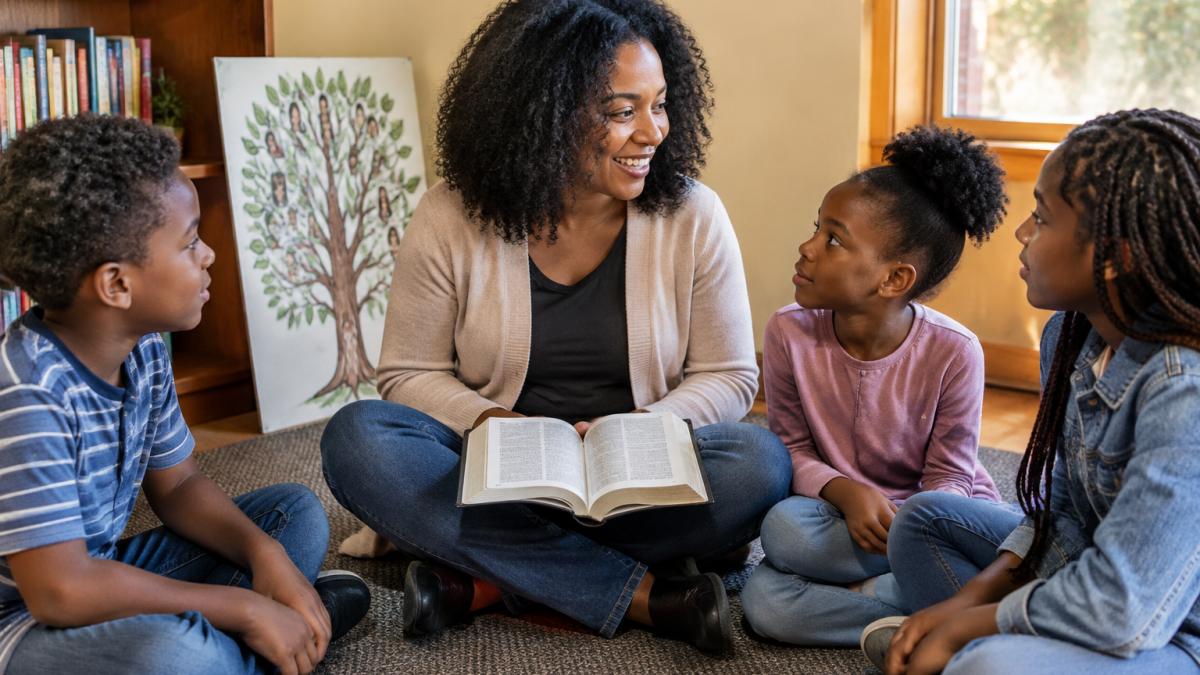
Ages 4-6: Draw and Sing
- Objective: Name one person who taught them about God.
- Materials: Crayons, a pre-drawn three-branch family tree template, a short hymn their grandparents' generation would recognize.
- Activity (10 minutes): Children color three circles on the tree, one for themselves, one for a parent, one for a grandparent or church elder, and say the person's name aloud.
Younger children need pictures and repetition, not paragraphs. If the activity needs a written instruction longer than one sentence, it is too complex for this band.
Ages 7-9: Build a Paper Timeline
- Objective: Place their own family within the larger story of Scripture.
- Materials: Adding-machine tape or a long strip of butcher paper, markers, a printed list of five Old Testament figures (Abraham, Moses, David, Esther, Daniel).
- Activity (15 minutes): Students mark the five biblical figures on the timeline, then add their own birth and one grandparent's birth at the far right end.
Ages 10-12: Interview a Church Elder
- Objective: Gather and report a first-person faith story.
- Materials: A printed interview guide with five questions, a notebook, and a two-minute reporting slot the following week.
- Activity (two sessions): Session one assigns the interview and models one question aloud. Session two has each student report one answer to the class in under two minutes.
Teens: Compare Scripture with Church History
- Objective: Evaluate how a faith community handled a real historical moment and articulate their own view.
- Materials: Two short primary-source excerpts from your tradition's history, a compare-and-contrast worksheet, and a discussion covenant the class writes together.
- Activity (20 minutes): Small groups read the excerpts, list what each side believed, and identify one point of agreement and one point of tension.
Give teens a teaching role, assigning them to lead the report-back for the 7-9 band, and watch engagement shift. Older students need discussion and real responsibility, not more coloring pages.
Watch out: worksheets aimed at adults will lose a room of seven-year-olds in minutes, and teen discussion without a written covenant can turn into argument.
Each age band gets its own objective, materials, activity, discussion prompt, and take-home piece.
| Age group | Objective | Activity and time | Discussion prompt |
|---|---|---|---|
| Ages 4-6 | Name one person who taught them about God | Color three circles on a family tree, 10 minutes | "Who told you about God first?" |
| Ages 7-9 | Place their family within the story of Scripture | Mark five biblical figures on a paper timeline, 15 minutes | "What is the longest gap on your timeline?" |
| Ages 10-12 | Gather and report a first-person faith story | Interview a church elder, two sessions | "What surprised you about the answer you got?" |
| Teens | Evaluate how a faith community handled a historical moment | Read two primary-source excerpts in small groups, 20 minutes | "If you had been there, what would you have done?" |
Step 4: Bring in Black Sunday School Curriculum and Church History
Heritage teaching gets concrete when students see real people who walked the same road. This is where Black Sunday School curriculum and church history earn their place.
Our own materials, including Sacred Lineage: A Bible Study Journal and The Hebrew Heritage Toolkit, are designed to support this kind of teaching. You can explore the full collection to see how they might fit a class or small group.
Church history gives students named examples. Cover how faith communities formed, how believers worshiped under pressure, and how the church carried Scripture across generations.
Handle contested history honestly. Present what is documented, name what is debated, and never shame a student for asking.
Step 5: Measure Learning and Encourage Reflection
You cannot grade faith, but you can watch for growth. Reflection turns a lesson into a habit, and a simple rubric keeps a teacher honest about whether the lesson actually landed. Most practitioners find that three short checkpoints across a term tell them more than a weekly quiz.
A Simple Three-Point Rubric
Use the same three questions after every heritage lesson, scored informally as "not yet," "getting there," or "yes":
- Recall: Can the student name the anchor verse and one person from the lesson?
- Connect: Can the student say how that person or story relates to their own family or church?
- Apply: Can the student name one thing they will ask or do at home this week?
A student who moves from "not yet" to "getting there" on Connect over four weeks is learning. A student stuck on Recall across the term may need a different activity, not more repetition.
Reflection Prompts That Work by Age
- Ages 4-6: "Draw one thing you want to ask your grown-up about God."
- Ages 7-9: "Finish this sentence: Our family's faith story is..."
- Ages 10-12: "What is one question you want to ask an older person at church, and why?"
Keep prompts short. One sentence is enough; a page of questions shuts down reflection rather than inviting it.
Checkpoints Across the Term
- Week 1: A one-sentence exit ticket, "What is one thing you learned today?"
- Week 3: The family interview report-back, scored only on whether it was completed and shared.
- Week 6: A short journal entry read privately by the teacher, not the class.
A journal gives every student a private place to work out what they are learning. Our spiritual lineage Bible study journal guide shows how to use one across several weeks without turning it into homework.
Measure engagement, not memorization. A student who asks a harder question this month than last month is learning, and that is the outcome a heritage lesson is built to produce.
Watch out: collecting journals and reading them aloud breaks the trust the reflection depends on. Read privately, respond in one sentence, and return them the same week.
Where to Find Free African American Sunday School Lessons
Free resources exist, and you should use them. The key is checking soundness before you teach.
Look for materials that:
- Anchor every lesson in Scripture, not opinion
- Name their sources for historical claims
- Offer age-appropriate activities, not just readings
June Conway's materials include a Study Companion & Discussion Guide for groups, and the business offers free resources, including the free resources page.
Reviewing a sample before committing can show whether a curriculum fits your congregation. Read one lesson end to end.
Heritage teaching asks more of a teacher than a standard lesson.
Frequently Asked Questions
What does the Bible say about heritage?
Scripture treats heritage as something God gives and something people pass on. Psalm 127:3 calls children a heritage of the Lord, and Psalm 16:6 describes a boundary line that has fallen in pleasant places. Passages like Deuteronomy 6:6-7 tie heritage to daily teaching in the home, while Psalm 78:4 commands one generation to tell the next about the Lord's works. For Sunday school, these verses give teaching heritage a biblical basis: it is not a cultural add-on but an instruction repeated across the Old and New Testaments.
How can I teach heritage in a Sunday school lesson without it feeling academic?
Start with one Bible verse, one story, and one hands-on activity per session. For example, read Psalm 127:3 together, ask each child to name one thing an older family member taught them, then have them draw or write it on a card to take home. Keep the history short and concrete: a person, a place, a date. Teaching heritage works best when students do something with the material rather than only hearing it explained.
Can I use free African American Sunday school lessons if my class is small or mixed?
Yes. Free lesson plans from denominational publishers and church history archives work well in small or mixed classes because they are built around discussion prompts rather than grade-level reading. Choose one lesson, read it fully before class, and adjust the vocabulary for your youngest student. If your group spans several ages, pair older students with younger ones for the activity portion so the lesson stays inclusive without extra preparation.
How do I handle difficult or contested parts of church history with children?
Decide in advance what your class can hold, and tell your volunteers the plan. For younger children, focus on faithful people and their choices rather than on conflict. For older students, present the facts plainly, name that Christians have disagreed, and return to a Godly heritage Bible verse that keeps the focus on God's faithfulness across generations. Give students a way to ask follow-up questions privately, and never put a child on the spot to represent an entire group.