 blog
7 Sunday School Curriculum on Ancestry Lessons That Work
Last Updated: November 10, 2026
Quick Summary
A sunday school curriculum on ancestry is a structured set of lessons that traces biblical family lines and connects them to a student's own heritage and identity in Christ. This guide lays out seven lessons for a quarter, from Abraham and Ruth to Matthew's genealogy and a personal reflection on Psalm 78.
- Seven lessons is the right length for a quarter; fewer feels rushed and more loses momentum.
- Matthew's genealogy includes five women: Tamar, Rahab, Ruth, Bathsheba, and Mary, several of them Gentiles.
- Build every lesson around one discussion question and one hands-on task to keep middle school classes engaged.
- Print the family tree on 11x17 paper if your church copier allows it, or tape two letter-size pages together.
- Send home one question per lesson and one short reflection prompt to extend the study into the week.
Table of Contents
- Why an Ancestry Curriculum Belongs in Sunday School
- The Genealogy of Jesus for Kids: Making Long Lists Come Alive
- Building a 7-Lesson Ancestry Curriculum Unit
- The Role of Women and Cultural Diversity in Christ's Lineage
- Visual Genealogy Mapping: From Whiteboard to Family Tree
- Handling Sensitive Passages Without Losing Your Class
- Bringing Ancestry Study Home: A Parent-Teacher Connection
- Choosing Your Ancestry Curriculum and Starting This Quarter
- Frequently Asked Questions
Why an Ancestry Curriculum Belongs in Sunday School
Heritage shows up everywhere in Scripture. God tells Abraham his descendants will outnumber the stars. Matthew opens his Gospel with a list of names, not a birth scene. Revelation closes with "every tribe and tongue."
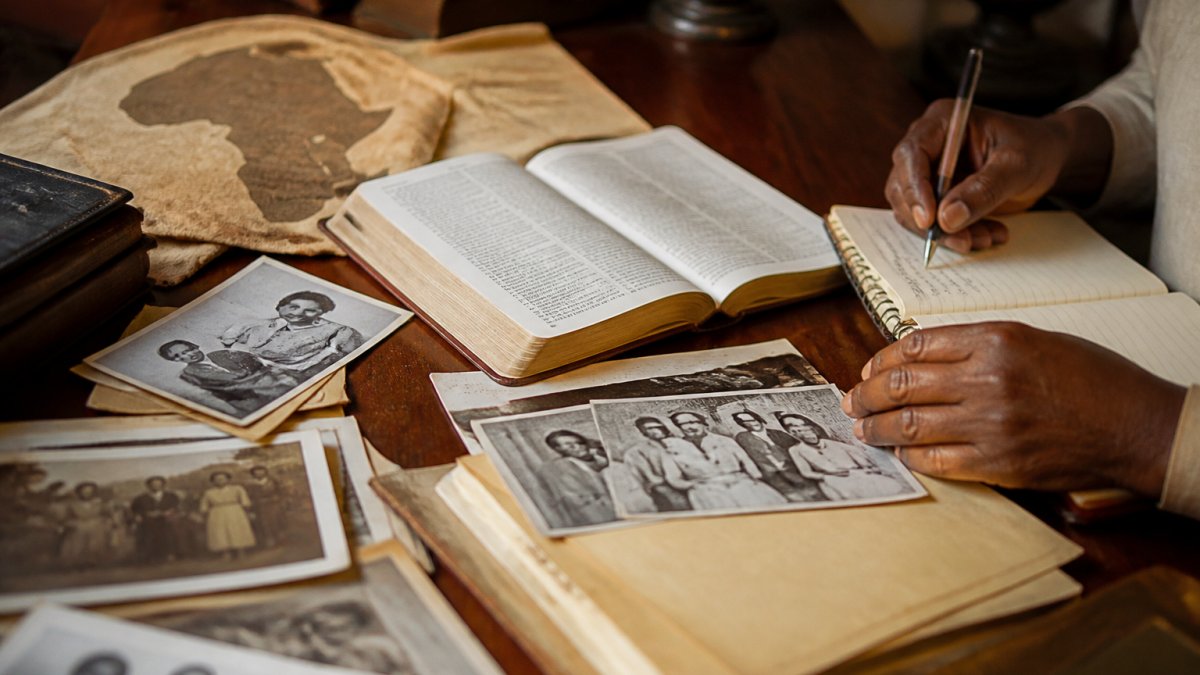
Many African American believers hunger to connect their family story to the biblical story, and a curriculum on ancestry answers that hunger with Scripture instead of speculation.
What Scripture Says About Heritage and Identity
The Bible treats heritage as a gift and a responsibility. Passages worth building a lesson around:
- Deuteronomy 32:7 tells the reader to ask elders about the days of old.
- Psalm 78 commands one generation to tell the next about God's works.
- Matthew 1:1-16 records the legal line from Abraham to Jesus.
A common mistake is teaching these lists as trivia. They are theology. Each name is evidence of God's covenant keeping, and students should hear that plainly.
United States Conference of Catholic Bishops, Bible introduction and genealogy notes
The Genealogy of Jesus for Kids: Making Long Lists Come Alive
The genealogy of Jesus for kids is the hardest passage in the unit to teach and the most rewarding.
Read Matthew 1:1-16 aloud, but pause at five names and tell the one-sentence story behind each: Tamar, Rahab, Ruth, Bathsheba, Mary. The list stops being a list.
Then ask: "Why would God put these names in the opening of the most important book ever written?" Let them argue.
For teachers who want deeper background, our guide on how to study biblical genealogy effectively walks through the exegesis step by step.
Three Classroom Activities for Matthew 1 and Luke 3
- Name Card Chain. Give each student one ancestor card. Have them link arms in order. The chain shows the covenant running through history.
- Two Lists, One Story. Split the class in two. One group reads Matthew, one reads Luke. Compare the names and ask why they differ.
- The One-Sentence Story. Assign one ancestor per student. Each writes a single sentence on why that person matters.
Building a 7-Lesson Ancestry Curriculum Unit
Seven lessons is the right length for a quarter. Fewer feels rushed, more loses momentum. Here is the sequence we would teach:
| Lesson | Focus | Key Passage | Class Activity |
|---|---|---|---|
| 1 | Why heritage matters | Deuteronomy 32:7 | Family story share |
| 2 | Abraham and covenant | Genesis 12, 15 | Promise timeline |
| 3 | Ruth and Boaz | Ruth 4 | Loyalty discussion |
| 4 | Matthew's line | Matthew 1:1-16 | Name card chain |
| 5 | Luke's line | Luke 3:23-38 | Two-list comparison |
| 6 | Women in the line | Matthew 1, Ruth | Story cards |
| 7 | Your place in the story | Psalm 78 | Personal reflection |
Watch out: seven lessons built on lecture alone will lose a middle school class by week three. Build every lesson around one discussion question and one hands-on task.
The Role of Women and Cultural Diversity in Christ's Lineage
Most curricula skip this, and it is the strongest angle in the whole unit. Matthew's genealogy includes five women: Tamar, Rahab, Ruth, Bathsheba, and Mary. Several are Gentiles. One is a Moabite.
That detail is not a footnote. It is the point: God's redemptive plan always included people the culture counted out. Teach it as a standalone lesson, not a sidebar.
A Five-Woman Lesson That Fits One Class Period
Build the lesson around a simple three-column chart on the board: Name | What Scripture Says | Why It Matters in the Line. Fill it in together, one woman at a time, using these anchors:
- Tamar (Genesis 38; Matthew 1:3). A Canaanite widow who acted boldly to secure her place in Judah's family line. Her uncomfortable story shows God working through messy family situations, not sanitized ones.
- Rahab (Joshua 2; Matthew 1:5). A Canaanite woman in Jericho who hid Israelite spies and was spared with her household. Matthew calls her Rahab the prostitute, not a softened title; her faith is commended in Hebrews 11:31 and James 2:25.
- Ruth (Ruth 1-4; Matthew 1:5). A Moabite widow who pledged loyalty to Naomi and became the great-grandmother of David. The book ends with a genealogy tying a foreigner directly to Israel's greatest king.
Read each passage aloud, then ask the chart question: what do these five have in common besides being women? Students usually land on the answer themselves: outsiders, scandal, and unlikely faithfulness. That is the lesson.
Why the Diversity Angle Belongs in the Lesson, Not the Appendix
Rahab was Canaanite. Ruth was Moabite. Tamar was Canaanite. The genealogy of Jesus is a multi-ethnic family tree, which speaks directly to students asking where they fit and corrects a common misreading: the Old Testament is not about one ethnic group keeping others out, but about God's covenant moving through and toward the nations.
Volunteer-taught classes often mention the women in one sentence and move on, wasting the strongest discipleship moment in the unit. Give it a full lesson, a chart, and a discussion question, and the material does the work.
Discussion Questions for This Lesson
- Why do you think Matthew included these women in the opening of his Gospel when other genealogies left women out?
- Which of these five stories is hardest to hear? Why might God have kept it in the Bible anyway?
- Rahab and Ruth were outsiders who became part of Jesus' family. What does that say about who belongs in God's family today?
- If you could add one name from your own family history to a chart like this, whose story would you want the class to hear?
Watch out: these stories include sexual violence, prostitution, and adultery. Preview the lesson with your ministry leader, use age-appropriate language for younger classes, and keep the focus on God's faithfulness rather than on the details of the sin.
Smithsonian National Museum of African American History and Culture, family history resources
Visual Genealogy Mapping: From Whiteboard to Family Tree
Visual mapping is the difference between a lesson students remember and one they forget by lunch. Most curricula stop at a whiteboard sketch; the stronger move is a printable family tree every student can build, label, and take home.
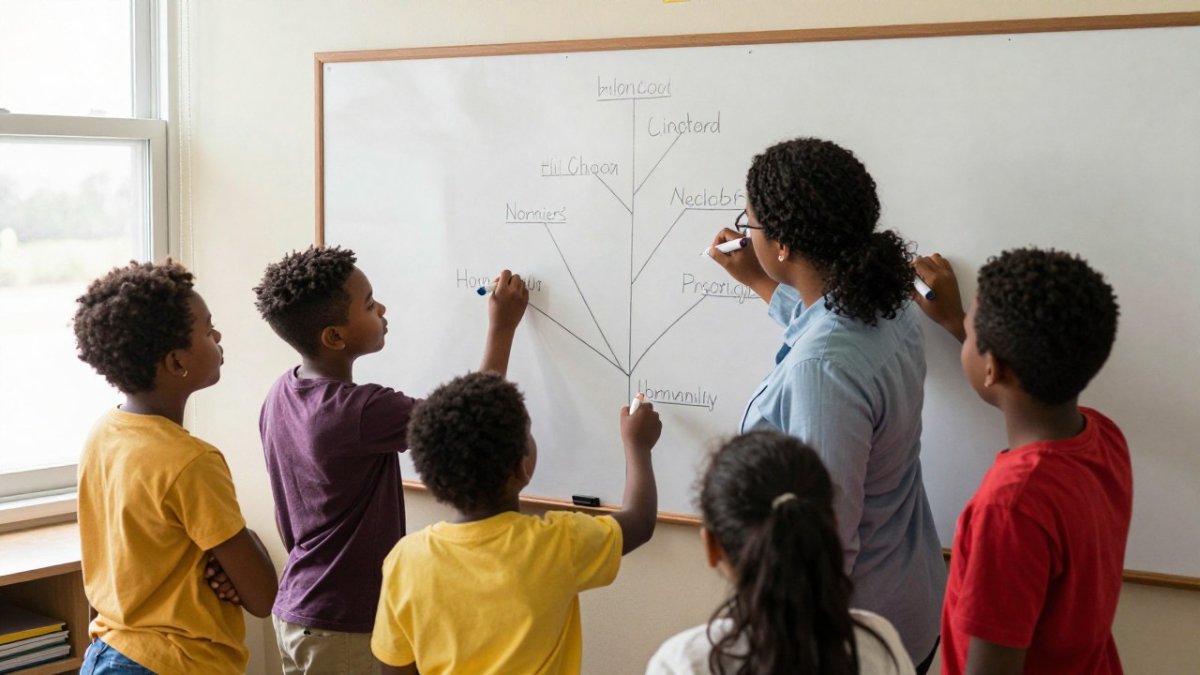
The Three-Layer Map Every Class Should Build
Treat the genealogy as three stacked layers, and build them in order across the unit:
- The covenant trunk (Abraham to David). Start with Abraham, Isaac, Jacob, and the twelve tribes. This is the promise layer. Students should see that the line begins with a promise, not a pedigree.
- The kingdom branches (David to the exile). Add the kings, including the split between Israel and Judah. This is where the line gets messy, and that is the teaching point.
- The return and the fulfillment (exile to Jesus). Close with the return from Babylon and the arrival of Christ. Matthew 1:17 gives you the structure in one verse: fourteen generations, three times.
A simple three-step build works for any age group:
- Draw the trunk. Abraham at the bottom, Jesus at the top.
- Add the branches. One branch for each major period: patriarchs, judges, kings, exile, return.
- Let students place names. Hand out name cards and let the class tape them in place.
The physical act of placing a name does more than a worksheet. Students argue, correct each other, and remember.
A Printable Family Tree Students Can Take Home
A whiteboard sketch disappears when the eraser comes out. A printed tree goes home in a backpack. Build a one-page template with these elements and you have a reusable asset for every class in the unit:
- A trunk column down the center with the three Matthew 1:17 divisions labeled.
- Empty name boxes sized for student handwriting, one per generation.
- A side panel with the five women from Matthew's line, each with a blank line for a one-sentence story.
Print it on 11x17 paper if your church copier allows it; the larger sheet gives students room to write and makes the tree legible on a classroom wall. With only letter-size paper, print two pages and tape them together along the trunk.
Five Ways to Use the Map in Class
- Wall build. Tape the template to the wall and let the class fill it in together over the quarter, one lesson at a time.
- Name card sort. Hand out ancestor cards and have students place them in the correct generation box. Time it and let teams compete.
- Color-code the periods. Assign one color per period (patriarchs, kings, exile, return) and have students shade the boxes. The color pattern makes the structure visible at a glance.
- Women's panel. After the women's lesson, have students fill in the side panel with one sentence per woman.
- Take-home completion. Send the template home with the parent guide and ask families to complete the "My Place in the Story" strip together.
Digital Options for Churches With Screens
If your classroom has a projector or tablet cart, a slide deck with the same three layers works as a digital version. Build one slide per period and reveal names as you teach; for review, use a free online quiz tool to show a name and ask which period it belongs to. The digital version reinforces the printed tree rather than replacing it.
Watch out: a map with too many names becomes unreadable. Cap the printed tree at the generations Matthew 1:17 names, and keep the full Luke 3 list on a separate reference sheet for teachers who want it.
Handling Sensitive Passages Without Losing Your Class
Some passages in this unit raise real questions. Deuteronomy 28 comes up often, and teachers worry about alienating class members. Teach the text in its historical context and do not force conclusions the text does not force.
Three ground rules keep discussion healthy:
- Read the whole passage first. Context prevents proof-texting.
- Separate what Scripture says from what a teacher infers. Label your own opinions as opinions.
- Leave room for unanswered questions. Faith handles mystery better than forced certainty.
A common mistake is letting one heated question take over the class. Park it, name it, and offer to continue after class. Most teachers find the conversation goes better one on one.
Bringing Ancestry Study Home: A Parent-Teacher Connection
Class time is limited. The parent-teacher connection extends the lesson into the week without adding homework burden. Send home one question per lesson and one short reflection prompt.
For families who want a journal-based path, our spiritual lineage Bible study journal guide shows how to structure weekly reflection.
Three simple at-home tasks:
- Ask a grandparent for one family story.
- Write one sentence about an ancestor's faith.
- Pray through one name from Matthew 1.
Parents do not need a theology degree to lead these. They need fifteen minutes and a listening ear.
Choosing Your Ancestry Curriculum and Starting This Quarter
Choosing a curriculum comes down to four questions: Is it biblically sound? Is it usable by a volunteer teacher? Does it include discussion questions? Does it fit a quarter?
June Conway is a retired educator and nutritionist with a Bachelor of Science in Home Economics Education, a Master's degree in Nutrition, and over four decades of public service.
Before you commit, review the author's background on the June Conway page and download the free teaching resources. When you are ready, you can explore the full collection and order for your class.
Pricing depends on format and bundle, so check the June Conway website for current prices or a quote.
The hardest part of teaching ancestry is not the material.
Frequently Asked Questions
What does the Bible say about ancestry and heritage?
Scripture treats ancestry as a record of God's faithfulness. Matthew opens the gospel with a lineage, and Luke traces Jesus back to Adam. Passages like Psalm 78 and Deuteronomy 32:7 command families to pass down the story of what God has done. The Bible also warns against using genealogy for pride or endless speculation, as Paul does in 1 Timothy 1:4. The point is not status but gratitude: your heritage is a testimony of grace, and an ancestry curriculum should teach it that way.
How do I teach the genealogy of Jesus for kids without losing their attention?
Skip the recitation and tell the stories behind the names. Matthew 1 includes Tamar, Rahab, Ruth, and Bathsheba, four women with dramatic narratives your class already knows from the Old Testament. Build a paper family tree together, one name per week, and let students add a one-sentence story for each ancestor. For the genealogy of Jesus for kids, the goal is recognition, not memorization: by the end of the unit, students should see the lineage as a chain of real people God used.
Why does the Bible seem to warn against studying genealogies?
The warning in 1 Timothy 1:4 and Titus 3:9 targets speculating about genealogies to prove spiritual superiority, not the study of ancestry itself. Paul objected to teachers who used lineage to exclude people or start quarrels. A sound Sunday school curriculum on ancestry keeps the focus on God's sovereignty and grace, uses Scripture as the final authority, and avoids claims about hidden bloodlines. When heritage study builds humility and faith, it stays within biblical bounds.
Can I use an ancestry curriculum if my class has not done DNA testing?
Yes. DNA results are an optional enrichment, not a requirement. The core of any ancestry curriculum is Scripture, history, and reflection, and those work with or without a test kit. If some members have results, invite them to share what they learned and how it shaped their sense of identity. Keep the conversation on the biblical story rather than on percentages or haplogroups, and direct anyone who wants testing to the provider's own site for current pricing.