 How-to
How to Study Deuteronomy 28 for Covenant Blessings and Curses
Last Updated: October 30, 2026
Quick Summary
To study Deuteronomy 28, use a three-pass method: read the whole chapter in three sittings, map its structure of blessings and curses, then cross-reference it with Leviticus 26 and Deuteronomy 27. Read it as an ancient covenant treaty, not a fortune-telling manual.
- Read verses 1-14, then 15-44, then 45-68 in three separate sittings.
- The chapter divides into blessings in verses 1-14 and curses in verses 15-68.
- The curses escalate from personal hardship to national collapse to exile.
- Read Deuteronomy 27:9-26 first to see the public covenant ceremony behind chapter 28.
- Avoid proof-texting single verses; read the whole section before quoting a line.
Table of Contents
- Deuteronomy 28 Historical Context
- A Step-by-Step Method for Studying Deuteronomy 28
- Deuteronomy 28 Blessings and Curses: What the Text Actually Says
- Deuteronomy 28 Slave Verses Meaning: Interpreting Difficult Passages
- Deuteronomy 28 Study Questions for Personal Reflection and Group Discussion
- Common Mistakes to Avoid When Studying Deuteronomy 28
- Start Your Own Deuteronomy 28 Study with June Conway
- Frequently Asked Questions
Deuteronomy 28 Historical Context
Moses speaks to a second generation of Israelites, not the ones who left Egypt; their parents died in the wilderness.
Deuteronomy follows the pattern of a suzerain treaty, a formal agreement between a great king and a lesser people. That pattern shapes how you should read the chapter:
- A historical prologue recalling what God has done
- Stipulations naming what the people must do
- Witnesses calling creation to testify
Once you see the treaty pattern, the chapter stops feeling like a random list of disasters.
The covenant rests on relationship, not rule-keeping alone. God calls Israel his people before he calls them to obey.
Where Deuteronomy 28 Sits in the Book
Deuteronomy is structured as three addresses Moses gives before his death. Chapter 28 falls near the end of the second address, after the covenant stipulations of chapters 12 through 26 and the ratification ceremony of chapter 27, which ends with the people on Mount Ebal and Mount Gerizim reciting blessings and curses aloud. Chapter 28 then expands those curses and blessings in detail.
The chapter also looks forward. The curses culminate in exile (verses 45 through 68), and chapters 29 and 30 describe covenant renewal and restoration after exile. Deuteronomy 28 is the pivot between covenant faithfulness and covenant failure.
Original Audience vs. Modern Readers
A common mistake is to read Deuteronomy 28 as if it were written directly to twenty-first-century individuals. The original audience was a nation-state about to enter a land, governed by a covenant that included land, temple, and national identity. The blessings and curses describe national outcomes: agricultural abundance, military security, and political independence.
That does not make the chapter irrelevant to modern readers, but it means you must ask two questions: What did this mean for Israel? And what principles carry over today? Mark where the text speaks to "you" in the singular and where it speaks to the nation as a whole; that distinction will keep you from misapplying promises and warnings.
Why the Treaty Pattern Matters for Interpretation
Ancient Near Eastern treaties followed a recognizable form, and Deuteronomy deliberately uses it: a great king would recite his past kindnesses, list his demands, call witnesses, and name blessings for loyalty and curses for rebellion.
That pattern also explains the length and intensity of the curses. In treaty documents, the curses section was often longer than the blessings because it was meant to deter rebellion.
A Note on Genre and Language
Deuteronomy 28 mixes legal language, poetic imagery, and prophetic warning. The blessings and curses are covenant sanctions, not a fortune-telling manual.
Understanding the genre also helps with the difficult passages later in the chapter. The slave verses and the siege imagery are part of the covenant curse list, describing what happens when a nation collapses under judgment.
How This Context Shapes Your Study
When you open Deuteronomy 28, start with these context questions:
- Who is speaking, and to whom?
- Where does this chapter sit in the book's argument?
- What treaty elements can you identify?
Answer those questions first, and the rest of your study will be grounded.
A Step-by-Step Method for Studying Deuteronomy 28
The best way to study Deuteronomy 28 is a three-pass method: read it whole, map its structure, then cross-reference it. Each pass answers a different question, and together they keep you from proof-texting a single verse.
Here is the method we recommend, with time estimates for each step.
| Step | What You Do | Time | What You Gain |
|---|---|---|---|
| 1. Read in three sittings | Read the chapter aloud three times | 45 min | The big picture |
| 2. Map the structure | Outline blessings and curses | 30 min | The chapter's logic |
| 3. Cross-reference | Compare Leviticus 26 and Deuteronomy 27 | 40 min | Covenant context |
Step 1: Read the Chapter in Three Sittings
Read the whole chapter first, without stopping to analyze. Deuteronomy 28 is long, and the curses section runs from verse 15 to verse 68. Breaking it up helps.
- First sitting: read verses 1 through 14 slowly.
- Second sitting: read verses 15 through 44.
- Third sitting: read verses 45 through 68.
Step 2: Map the Literary Structure and Chapter Outline
A simple outline reveals how the chapter is built:
- Verses 1 through 14: blessings for obedience
- Verses 15 through 68: curses for disobedience
- Verses 15 through 19: curses on daily life
Notice the escalation. The curses move from personal hardship to national collapse to exile. That progression is deliberate, and it mirrors the treaty pattern from the historical context.
Step 3: Cross-Reference with Leviticus 26 and Deuteronomy 27
Leviticus 26 covers the same ground in earlier form. Reading the two side by side shows what Moses emphasizes here.
Watch out: don't read the curses as a checklist for judging other people. They describe covenant consequences for a nation, not a tool for sorting who is blessed and who is cursed.
Deuteronomy 28 Blessings and Curses: What the Text Actually Says
Deuteronomy 28 blessings and curses form two halves of one covenant agreement. The blessings describe life under God's favor; the curses describe what follows when a people turns away.
The Blessings of Deuteronomy 28:1-14
The blessings of Deuteronomy 28:1-14 cover every part of ordinary life. Obedience brings fruitfulness in the field, health in the family, and security from enemies.
The text names specific arenas:
- The city and the field
- Children, crops, and livestock
- Basket and kneading bowl
The phrase "high above" appears here. God promises to set Israel above the nations, not because of their strength, but because of covenant faithfulness.
The Curses of Deuteronomy 28:15-68
The curses of Deuteronomy 28:15-68 reverse every blessing. Where obedience brought abundance, disobedience brings loss. The section is long and heavy, and readers often stumble here.
The reversal is the key. Each curse undoes a specific blessing:
- Confusion replaces clarity
- Defeat replaces national security
- Exile replaces dwelling in the land
Moses lists diseases, drought, and siege. He describes a people scattered among the nations. The language is severe because the covenant is serious.
Deuteronomy 28 Slave Verses Meaning: Interpreting Difficult Passages
The Deuteronomy 28 slave verses meaning comes down to context: they describe one outcome of covenant disobedience, not God's endorsement of slavery.
Readers wrestle with these verses for good reason. Here is how to interpret them responsibly:
- Read them as consequence, not command.
- Note the ancient setting and its economic systems.
- Compare with the exodus, where God frees slaves.
Watch out: pulling one verse out of the curses section and treating it as a standalone rule is the most common interpretive error.
For a deeper, dedicated walkthrough of this specific passage, see Understanding Deuteronomy 28 Slave Verses Explained.
What the Text Actually Says
Deuteronomy 28:68 describes a return to Egypt and a sale into servitude as a curse.
The phrase "no buyer" is important. It means the people would be so utterly defeated that even their enemies would not purchase them. The curse is not about the legality of slavery; it is about total national humiliation and loss of covenant status.
The Covenant Setting
Deuteronomy 28 is a covenant document, and the curses are covenant sanctions describing what happens when a nation breaks its agreement with God. The slave language is one of many consequences listed, alongside disease, drought, siege, and exile.
That distinction matters because it keeps you from two errors: treating the verse as God's endorsement of slavery, or treating it as a direct threat to any person who sins. The verse is about national judgment, not individual fortune-telling.
Ancient Economic Systems and the Old Testament
Slavery in the ancient Near East was not identical to the race-based chattel slavery of the modern era.
When you read Deuteronomy 28:68, keep that background in mind. The verse is not describing a new law; it describes a return to the worst kind of servitude, the kind Israel had experienced in Egypt.
How to Avoid Misapplication
Here are three guardrails for studying the difficult passages in Deuteronomy 28:
- Read the whole chapter first. The slave verses are part of a long list of curses. Isolating them from the covenant context distorts their meaning.
- Distinguish description from prescription. The curses describe what will happen, not what God commands. The Bible records many things it does not endorse.
- Let the whole canon interpret the part. The exodus, the prophets, and the New Testament all speak to God's concern for the oppressed. Read the difficult verses in light of the whole Bible, not in isolation.
Cross-References for Deeper Study
- Exodus 1-15: The exodus as the paradigm of liberation from slavery.
- Leviticus 25:39-55: Laws about debt servitude and the Year of Jubilee.
- Deuteronomy 15:12-18: Regulations for releasing servants.
These passages do not erase the difficulty of Deuteronomy 28:68, but they show that the Bible's trajectory is toward freedom and dignity.
A Responsible Hermeneutic
When you encounter a difficult passage like this, follow a simple method:
- Observe: What does the text say, and what are the key words?
- Contextualize: What did it mean in its ancient covenant setting?
- Synthesize: How does it fit with the rest of Scripture?
That method will keep you from both avoiding the hard parts and misusing them. Deuteronomy 28 is a covenant document, and the slave verses are one of its darkest warnings. Read them with care, and let them drive you to the God who ultimately works to set people free.
Deuteronomy 28 Study Questions for Personal Reflection and Group Discussion
Good Deuteronomy 28 study questions move from observation to application. Use these for personal reflection or a Sunday School class.
Observation
- What two halves divide the chapter?
- Which blessings name daily life, and which name national life?
- Where does the text shift from blessing to curse?
Interpretation
- How does the treaty pattern shape the reading?
- What does covenant faithfulness mean in this chapter?
- Why does the curses section run so much longer than the blessings?
Application
- Where do you see gratitude or joyfulness missing in your own walk?
- What does listening to God's voice look like this week?
- How should this chapter shape how we teach others about consequences?
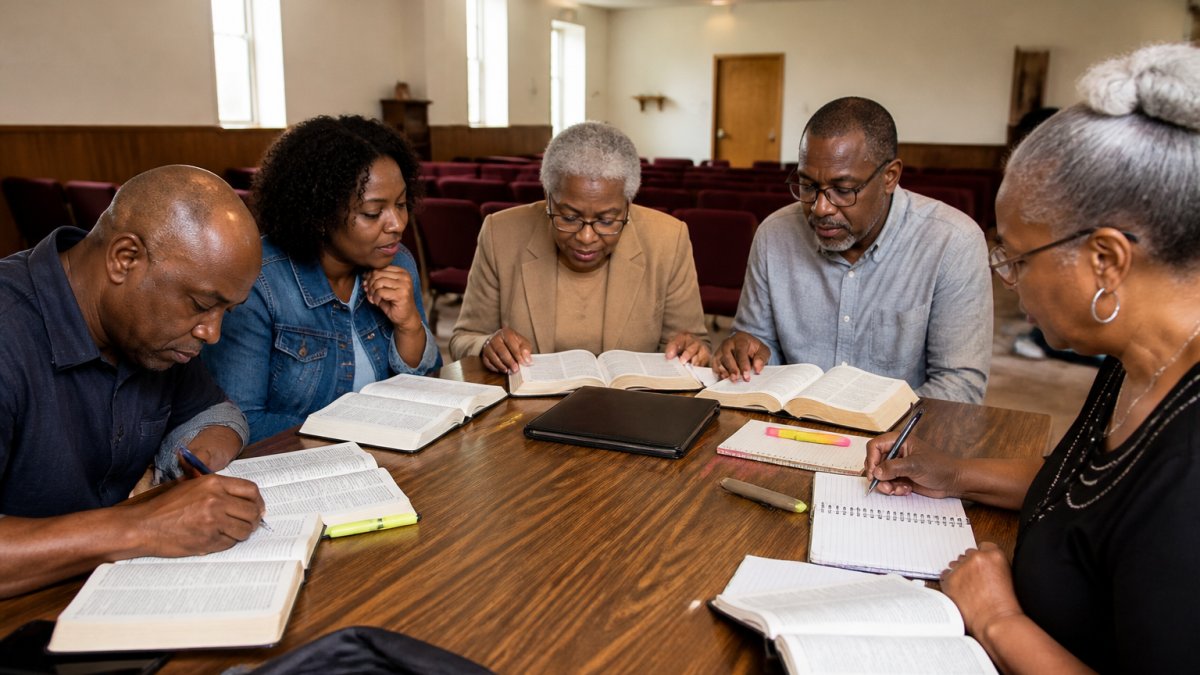
If you are leading a group, free discussion guides make the preparation lighter. You can download the free sample chapter and study guide to use with your class right away.
Common Mistakes to Avoid When Studying Deuteronomy 28
Most study errors with this chapter come from skipping context. Here are the ones we see often, and how to fix them.
- Reading the curses as personal threats. They address a nation under covenant, not individuals.
- Skipping the blessings. Half the chapter is promise; don't rush to the hard part.
- Ignoring Leviticus 26. The earlier version clarifies the later one.
A common mistake is treating the chapter as a fortune-telling tool. It is covenant instruction, meant to shape how a people lives before God.
Start Your Own Deuteronomy 28 Study with June Conway
Sacred Lineage is a 30-day guided Bible study journal for personal reflection. The Hebrew Heritage Toolkit is a research guide that examines biblical prophecy and historical evidence.
June Conway is a retired educator with a background in public service and faith-based teaching. You can explore the full collection or read more about June Conway before you begin.
Frequently Asked Questions
What is the main message of Deuteronomy 28?
Deuteronomy 28 presents the covenant blessings and curses that Moses set before Israel before they entered the Promised Land. The chapter teaches that obedience to God's commands brings blessing, while disobedience brings curse. It is not a standalone promise but part of the larger covenant framework in Deuteronomy. The main message is covenant faithfulness: God calls His people to listen to His voice, follow His commands, and experience life and abundance, while warning them about the consequences of turning away.
How should I study Deuteronomy 28?
Start by reading the chapter in three sittings: verses 1-14 (blessings), 15-44 (curses), and 45-68 (curses continued and covenant summary). Then examine the historical context and literary structure. Use a study method that includes cross-references to Leviticus 26 and Deuteronomy 27, and write down your questions. For group study, use the Deuteronomy 28 study questions to guide discussion. Avoid reading the curses in isolation; always interpret them in light of the covenant and God's redemptive plan.
What are the blessings and curses in Deuteronomy 28?
The blessings in Deuteronomy 28:1-14 include fruitfulness, agricultural abundance, protection from enemies, and being established as God's holy people. The curses in Deuteronomy 28:15-68 describe the reversal of these blessings: disease, drought, defeat, and exile. These are not random punishments but covenant consequences for disobedience. The curses escalate in intensity and culminate in the threat of exile, which later biblical history shows was fulfilled. Understanding this helps readers interpret the passage responsibly.
What do the slave verses in Deuteronomy 28 mean?
Deuteronomy 28:68 mentions a return to Egypt and being sold as slaves, which is a covenant curse for disobedience. This verse has been used historically to justify slavery, but that interpretation ignores the context: it is a warning to Israel about breaking covenant, not a prophecy about any particular race. The verse describes the reversal of the Exodus, where God brought Israel out of slavery. Reading it in context shows God's opposition to slavery and His desire for covenant faithfulness, not a divine endorsement of human bondage.
The hard part of this chapter is not reading it. It is reading it honestly, with context and humility, and letting it shape how you live. June Conway's guides give you the structure to do exactly that, with a 30-day journal for personal study, a research guide for the historical and DNA evidence, and a discussion guide built for groups. Get started with June Conway and study Deuteronomy 28 with clarity, context, and confidence.